What Fails a Virginia State Inspection? The Most Common Reasons (and Fixes)
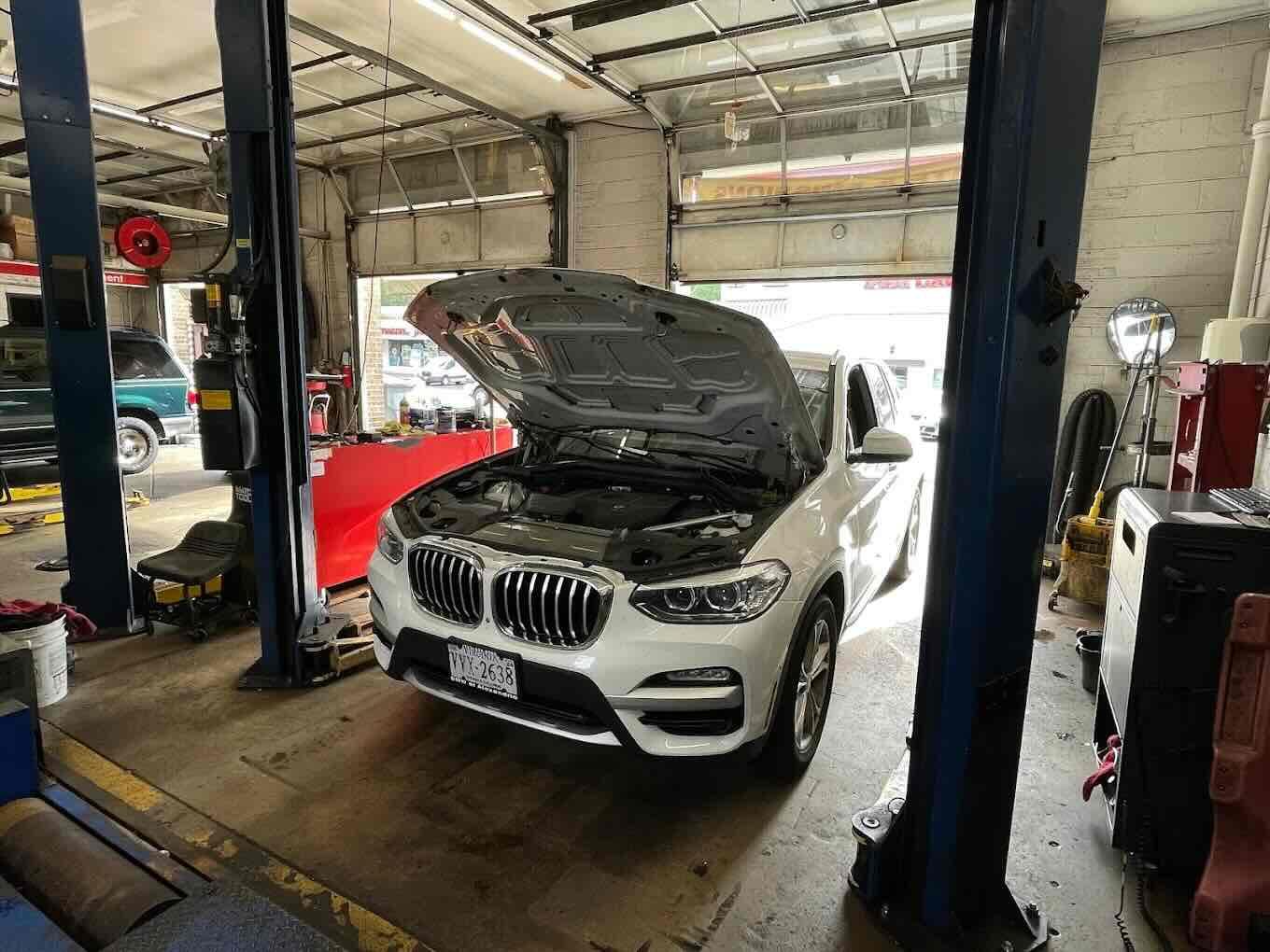
At our shop, three things fail a Virginia state inspection more than anything else: worn brakes, suspension problems and tires that are close to bald. Anything on the Virginia State Police list can fail a car, from a dead bulb to a torn wiper blade. If yours fails, you get a rejection sticker and 15 days to fix it and come back to the same station for a $1 re-check.
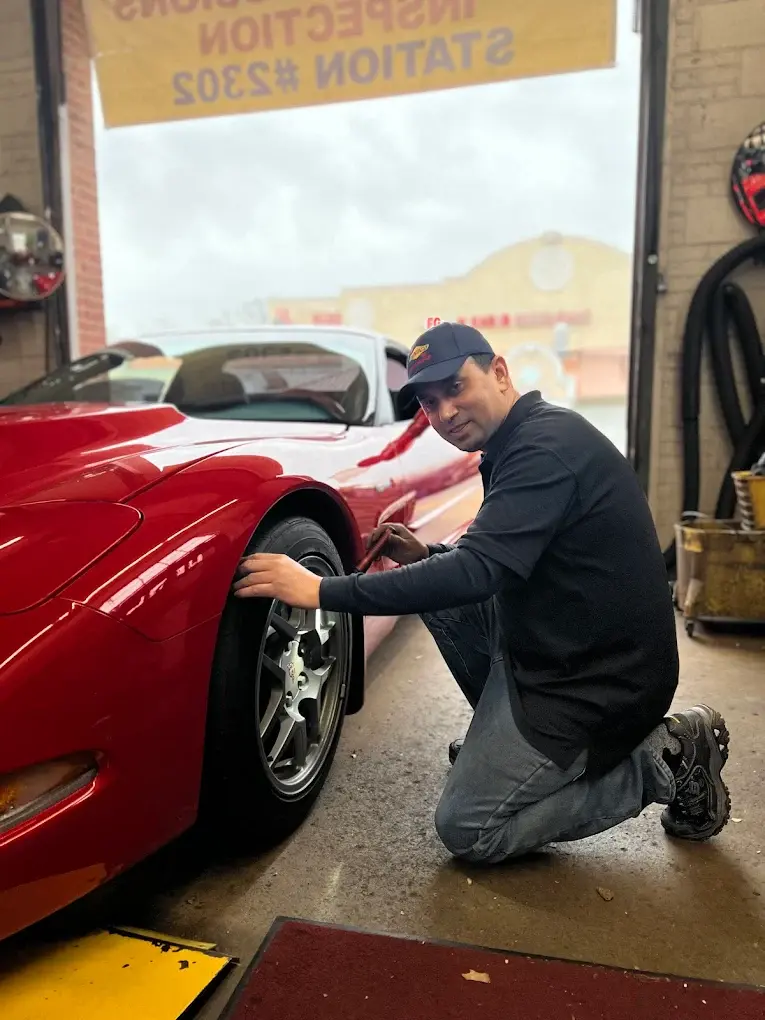
We're a certified Virginia state inspection station on Rolling Road, and our family has run this shop since 1990. Below is what we see fail, the exact pass/fail rules from the state regulation, and a 10-minute check you can do in your driveway first.
The three things we see fail most
Brakes, suspension and tires wear out slowly, so most drivers don't notice until an inspector measures them.
Worn brakes
Under 19VAC30-70-80 and 19VAC30-70-90, a car fails if:
- Brake pads or shoes are worn to less than 2/32 of an inch at any point
- Rotors or drums are worn past the maker's spec, badly scored, or cracked across more than half the braking surface
- Any brake fluid is leaking from the master cylinder, calipers, wheel cylinders or lines
- Brake hoses are cracked or worn through to the fabric
- Brake fluid in the master cylinder is below the proper level
- The pedal has less than 1/5 of its travel left when pressed hard
- The parking brake won't hold the car in gear with the engine revved slightly
The fix: usually new pads, and sometimes rotors, a hose or a caliper. Squealing or grinding when you stop is a good reason to have us look before inspection day. See brake repair.
Suspension and steering problems
19VAC30-70-110 covers everything that holds the wheels and points them. Common failures:
- Shocks or struts that leak enough to stop working, or are broken or loose
- Broken or sagging springs
- Ball joints worn past the maker's limit
- Loose tie rod ends, or a tie rod "repair kit" installed instead of a new part
- Control arm bushings that are missing or so worn the part moves by hand
- Too much play in the steering wheel (more than 0.4 inch on rack-and-pinion steering)
- An obvious power steering fluid leak, or fluid below the operating level
- A worn or loose wheel bearing
- A lift that raises the body more than 3 inches, or lift blocks on the front suspension
The fix: replace the worn part. Clunks over bumps, a bouncy ride or a car that wanders are early warnings. After parts like tie rod ends or struts, we usually recommend an alignment. See steering and suspension.
Tires close to bald
19VAC30-70-130 sets the tire rules:
- Tread under 2/32 of an inch, measured in two grooves side by side where the tire is most worn. Inspectors re-check at more spots around the tire before failing it.
- Tread wear bars touching the road in two grooves side by side at three spots around the tire
- Cord or fabric showing
- Bulges or knots in the sidewall, or signs of a broken belt
- A cut deep enough to reach the fabric, or a plug or patch in the sidewall
- A temporary "donut" spare on the car
- Radial and bias-ply tires mixed on the same axle
- Loose, cracked or missing lug nuts, or a bent or cracked wheel
The fix: new tires. A nail in the tread can often be repaired. Sidewall damage can't. See tire service.
It's maintenance, not make
People ask us all the time if their make or model is the type that fails. In our experience, no make fails more often than another. What decides it is how well the car has been kept up.
An older car that gets regular brake checks, tire rotations and an eye on the suspension can pass with no trouble. A newer car that's never been looked at can fail on pads and tires. So the best answer to what fails a Virginia state inspection is often "skipped maintenance." Catching wear early is cheaper than fixing it on a rejection sticker deadline. That's the idea behind preventive maintenance.
Everything else Virginia inspectors check
The full checklist lives in the Virginia Administrative Code, 19VAC30-70 and the VSP inspection manual. Beyond brakes, suspension and tires, here's what can fail a car:
| Item | Fails if |
|---|---|
| Headlights | A bulb is out, the lens is cracked, broken or discolored, aim is off, or moisture inside affects the beam |
| Brake lights | Fewer than two working brake lights, or a missing or dead third brake light on 1986 and newer cars |
| Turn signals and tail lights | A bulb is out, a piece of lens is missing, or a crack is taped or glued |
| Windshield | A chip, pit or star crack larger than 1½ inches above the bottom 3 inches of glass, or any crack that lets one piece move against another |
| Window tint | Tint on the windshield below the AS-1 line marked near the top of the glass, tint film that's scratched or wrinkled or blocks your view, or tinted rear glass without a mirror on each side |
| Wipers and defroster | Blade rubber is torn or brittle, metal touches the glass, or the defroster won't blow warm air |
| Mirrors | Missing inside or outside mirror (1969 and newer cars), or glass that's cracked or clouded |
| Horn | Doesn't work, or can't be heard from 200 feet |
| Exhaust | Any leak, a patched hole, a repaired muffler or catalytic converter, or loose or broken hangers |
| Seat belts and airbags | A belt is cut, frayed or won't latch, or an airbag was deployed and not replaced |
| Emissions equipment | The catalytic converter or other pollution parts are removed or disconnected |
Inspectors also check the doors, hood latch, battery, floor pan, seats and fuel system.
How dark your side and rear windows can be (50% light through the front side windows, 35% on the rear of a car) is set by Va. Code § 46.2-1052. The inspection rules don't include a darkness test, but police can ticket illegal tint on the road.
How to pre-check your car at home
This takes about 10 minutes and works best with a helper.
- Lights. Turn on the headlights, high beams, hazards and each turn signal. Have your helper stand behind the car while you press the brake and watch every brake light, including the third one up high.
- Horn and wipers. Honk once. Run the wipers and look for streaks, torn rubber or chatter.
- Glass and mirrors. Look for chips or cracks in the windshield and cracked mirror glass.
- Tires. Find the small raised wear bars across the tread grooves. If the tread is flush with them, the tire is at or near the limit. Check the sidewalls for bulges and cuts. Make sure no donut spare is still on the car.
- Seat belts. Buckle and unbuckle every belt. Look for fraying.
- Parking brake. Set it on a gentle slope. If the car creeps, have it checked.
- Listen. Grinding or squealing when you brake, or clunking over bumps, points to the parts that fail most.
If anything looks off, we can look at it first and tell you whether it would pass. We'd rather you know before inspection day.
If your car fails: the 15-day rejection sticker and $1 re-check
A failed car gets a rejection sticker in place of the approval sticker. Here's how the rules in 19VAC30-70-60 and 19VAC30-70-40 work:
- You have 15 days, plus the day of the inspection, to make repairs.
- Come back to the same station within that window and the re-check covers only the failed items. The fee is $1, and that station can re-check it up to two times.
- Go to a different station, or come back after 15 days, and it's a full new inspection at the full fee.
- You choose who does the repair. You can have the work done at any shop. Most of our customers have us do it: we're honest about what the car needs, our technicians are ASE-certified, and we use OEM parts backed by a 24-month/24,000-mile warranty honored at our shop.
- The rejection sticker isn't a pass, but it gives you time. For those 15 days, state law says you can't be charged with an equipment violation for that car's lights, tires, exhaust, windows, horn, steering, suspension or brakes (§ 46.2-1158). Once the rejection sticker runs out, you can be.
Our safety inspection is $20, the most a station can charge for a regular car under Va. Code § 46.2-1167. A re-check is $1 and motorcycles are $12.
Inspections are first come, first served. The line opens at 7 AM sharp, runs until 5 PM on weekdays and 1 PM on Saturday, and starts at the back of the station. Once your car is up, the safety inspection takes 8 to 15 minutes, longer if there's a problem, so your total time depends on the line. Luis, our certified state and emissions inspector, consistently stays past closing to try to take care of everyone already in line. Prefer not to wait? Book a drop-off inspection online.
Sources
- 19VAC30-70: Motor Vehicle Safety Inspection Rules (sections 40, 60, 80, 90, 110, 130 and the lighting, glass, mirror, horn, exhaust and seat belt sections)
- Virginia State Police: Official Motor Vehicle Safety Inspection Manual (2026)
- Virginia State Police: Vehicle Inspection FAQs
- Code of Virginia § 46.2-1167: Inspection fees
- Code of Virginia § 46.2-1158: Frequency and scope of inspection; rejection stickers
- Code of Virginia § 46.2-1052: Window tint limits
- 9VAC5-91-420: Emissions inspection procedure
- Virginia DMV: Emissions Inspections
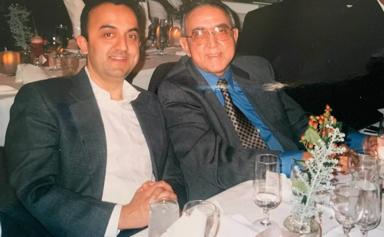
Ali, Owner & Service Manager
Ali runs Rolling Road Sunoco Automotive, the family shop his father founded on Rolling Road in 1990. He and our ASE-certified team have spent more than three decades keeping Springfield, Burke and West Springfield drivers on the road.
Related Services
- Brake RepairPads, rotors, calipers, and full brake system diagnostics.
- Tire ServiceMounting, balancing, rotation, alignments, replacements, and flat repair.
- Steering & SuspensionPower steering, shocks, struts, and complete suspension repair.
- State InspectionsVirginia state safety inspections to keep your vehicle road-legal.
Need a Hand With Your Car?
Walk-ins welcome at 6381 Rolling Rd, Springfield, VA 22152. Drop off any time with our 24/7 key drop box.