Failed Emissions Test in Virginia? Check Engine Light, Monitors & Your Free Retest
If you failed an emissions test in Virginia, start with the check engine light. On most 1996 and newer cars, the emissions test in Fairfax County reads the car's computer instead of the tailpipe, and an emissions code that turns that light on is an automatic fail. Fix the cause, let the car finish its self-tests, then get a free retest at the same station within 14 days.
How the Virginia emissions test works
Most 1996 and newer gas cars get an OBD-II test. The inspector connects to the diagnostic port under the dash and reads what the car's computer reports. Gas cars also get a quick visual check that the factory emissions parts are there, plus a check for visible smoke (DEQ).
There are three possible results, and they're not the same thing:
| Result | What it means | Do you pay? | What's next |
|---|---|---|---|
| Pass | No problems found | Yes | Results go to the DMV electronically |
| Fail | Emissions codes, a dead check engine bulb, or high readings | Yes | Repair, then one free retest within 14 days |
| Rejected from testing | The car can't be tested yet (monitors not ready, missing gas cap, exhaust leak and similar) | No | Fix the issue and come back |
DEQ is clear that a rejection is not a failed test, and you aren't charged for it (DEQ). That difference matters later if you need a waiver.
Check engine light on? That's an automatic fail
Under Virginia's regulation, any emissions-related trouble code that commands the check engine light on fails the car. So does a check engine light that doesn't work at all, like a burned-out bulb (9VAC5-91-420).
Your report lists up to five trouble codes in the Remarks section, even if the car has more. Every code has to be fixed to pass (DEQ).
If the light is flashing, slow down and get it checked right away. A flashing light points to a more serious problem that can damage the engine.
"Not ready" monitors after a battery change or repair
Your car constantly runs self-tests on its emissions systems. Each one is called a monitor. The DEQ form lists monitors such as misfire, fuel system, catalyst, oxygen sensor, evaporative system (EVAP) and EGR (DEQ rejection form).
When the battery is disconnected or replaced, or codes are cleared after a repair, those monitors reset to "not ready." The station can't test the car until enough of them finish. Virginia rejects a car from testing when (9VAC5-91-420):
- Model year 1996 to 2000: three or more monitors are not ready
- Model year 2001 and newer: two or more monitors are not ready
- Retest after a catalytic converter code: the catalyst monitor is not ready
If your car gets turned away at our station for this, you get an official printed report showing which monitors aren't ready. We don't charge the emissions fee, because the test can't be performed.
What a drive cycle is
Each monitor only runs under certain conditions, like a full warm-up or a steady stretch at highway speed. Driving through those conditions is called a drive cycle. Some owner's manuals list the exact steps for your car, and DEQ's form points you there (DEQ rejection form).
In our experience, most cars are ready after 30 to 60 miles of mixed highway and stop-and-go driving. That fits an EPA guidance memo, which says a mix of city and highway driving is the most effective way to set monitors and that a gas car's system typically runs all of them within two weeks (EPA).
If a monitor still won't set after a couple of weeks of normal driving, that can point to a real fault worth having diagnosed.
Common reasons cars fail emissions
| Problem | What you might notice | What usually fixes it |
|---|---|---|
| Oxygen (O2) sensor | Check engine light, worse gas mileage | Testing and replacing the bad sensor |
| Catalytic converter | Check engine light, rattling underneath | Finding why it failed, then repair or replacement |
| EVAP leak or gas cap | Check engine light, sometimes a loose or worn cap | Cap, hose, valve or seal repair |
| Engine misfire | Hesitation, rough running, flashing light | Plugs, coils or fuel system repair |
| Exhaust leak | Louder exhaust, rumble at idle | Pipe, gasket or manifold repair (a leak gets you rejected) |
| Open emissions recall | Usually nothing | Dealer recall repair (an open recall gets you rejected) |
A missing gas cap, an exhaust leak and an unfixed emissions recall each get a car rejected from testing (9VAC5-91-420). You can look up open recalls by VIN at NHTSA.
One more thing: a trouble code is a starting point, not a diagnosis. A catalytic converter code doesn't automatically mean you need a new converter. We test first so you pay for the part that's actually bad. See our check engine light diagnostics and exhaust and catalytic converter repair pages for more.
The free retest: how the 14-day window works
If your car fails, you get one free retest at the station that did the first test, within 14 calendar days (DEQ). Keep both pages the inspector hands you: the Vehicle Emissions Inspection Report and the Emissions Repair Data Form.
You can have the repair done anywhere. DEQ says anyone can work on the car, and if it passes the retest, that's the end of it. Most of our customers have us do it, for our honest diagnosis, ASE-certified technicians and 24-month/24,000-mile warranty, honored at our shop.
Plan around the monitors. If the repair clears the codes, the car needs time to finish its self-tests before the retest. Get the repair done early in your 14 days, not on day 13.
Our emissions inspection is $30, the state maximum. If you tested with us, your retest here is free inside that 14-day window. Once your car is up, Luis, our certified state and emissions inspector, takes 7 to 12 minutes for the test, longer if there's an issue. The line is first come, first served, so your total time depends on how long it is.
What if repairs get expensive? The emissions waiver
Virginia has a repair cost limit. If you spend at least the waiver amount on emissions repairs and the car still fails, you can get a waiver for registration. The amount is $1,090 on or after January 5, 2026, and DEQ adjusts it each year for inflation (DEQ). The figure for your car is printed on your failure report.
To qualify, all of these must be true (DEQ, 9VAC5-91-420):
- The car failed the first test and then failed a retest
- The repairs were done or approved by a Certified Emissions Repair Technician at a Certified Emissions Repair Facility (find one here)
- The repairs were done no earlier than 60 days before the first test
- You bring the repair data form and itemized receipts to the retest
We're a DEQ Certified Emissions Repair Facility with certified emissions inspectors, so emissions repairs done at our shop count toward the waiver.
There's no waiver for a rejection, visible smoke, or emissions parts that are missing, disconnected or not working. There's also none for a car under two years old with fewer than 24,000 miles that's still under its emissions warranty.
Running out of time before your registration expires? DMV may grant an extension, but you usually have to ask before the expiration date (DEQ).
Who needs an emissions test in Northern Virginia
Cars registered in Fairfax, Arlington, Loudoun, Prince William and Stafford counties, and the cities of Alexandria, Fairfax, Falls Church, Manassas and Manassas Park, need a passing test or waiver every two years to renew registration (DEQ). Your DMV renewal notice says "Emissions Inspection Required" if you need one.
You're exempt if your car is (DEQ):
- The current model year or one of the three before it (newer cars first titled in another state may still need a test)
- A gas car that is 25 or more model years old
- A hybrid rated at 50 mpg city or better (48 mpg for 2008 and 2009 models). Check your rating at fueleconomy.gov
- Fully electric or powered only by another clean fuel, a motorcycle, or a registered antique
Diesels are not exempt. 1997 and newer diesels rated 8,500 pounds or less get the OBD test.
You can test up to 90 days before your registration expires and still renew for two years. This is separate from your yearly Virginia state inspection sticker.
Mistakes that cost people a second trip
- Testing with the check engine light on. You'll pay $30 to hear what the light already told you. Get it diagnosed first.
- Swapping the battery or clearing codes the day before. The monitors reset and the car gets turned away.
- Fixing the car on day 13. Leave time for the monitors to set before your free retest runs out.
- Replacing parts off a code alone. Diagnose first. We inspect before we recommend, and we only suggest what the car needs.
- Waiting for a Saturday or the end of the month. That's when sticker deadlines cause rushes at our station. Come Monday through Friday, ideally in the morning. The inspection line opens at 7 AM sharp and starts at the back of the station. If you'd rather not wait, book a drop-off inspection online.
Sources
- Virginia DEQ, How do I get an inspection?
- Virginia DEQ, Why did my vehicle fail?
- Virginia DEQ, Vehicle Emissions (Air Check)
- Virginia Administrative Code, 9VAC5-91-420: Inspection procedure; rejection, pass, fail, waiver
- Virginia DEQ, OBD Rejection from Testing Report (form NVAS 151)
- U.S. EPA, Best Practices for Addressing OBD Readiness in I/M Testing of Diesel Vehicles (memo, March 2013; includes gasoline comparisons)
- Air Check Virginia, Certified Emissions Repair Facility listing
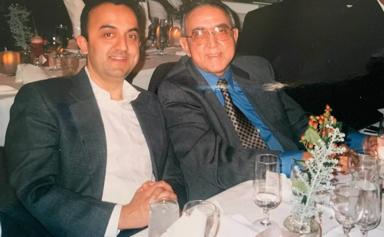
Ali, Owner & Service Manager
Ali runs Rolling Road Sunoco Automotive, the family shop his father founded on Rolling Road in 1990. He and our ASE-certified team have spent more than three decades keeping Springfield, Burke and West Springfield drivers on the road.
Related Services
Need a Hand With Your Car?
Walk-ins welcome at 6381 Rolling Rd, Springfield, VA 22152. Drop off any time with our 24/7 key drop box.