Winter Car Maintenance in Northern Virginia: Salt, Brine, Batteries & Tires
Winter car maintenance in Northern Virginia is less about blizzards and more about salt, cold mornings and the odd ice storm. Before the first freeze, test the battery, check tire tread and pressure, switch to winter washer fluid, confirm the coolant mix, and make sure the heater and defroster work. Then rinse the underbody whenever VDOT has treated the roads.
Your winter checklist
| Check | What to look for | When |
|---|---|---|
| Battery | Load test if it's 3 or more years old. Watch for slow cranking or dim lights. | Before the first hard freeze |
| Tire tread | At least 2/32" everywhere (Virginia's inspection limit), and more is better on ice | Now, and at every oil change |
| Tire pressure | The number on the driver's door label, checked cold | Monthly, and after each cold snap |
| Wipers | Streaks, chatter or torn rubber | Every 6 to 12 months |
| Washer fluid | Winter-rated fluid, reservoir full | Before the first freeze |
| Coolant | Correct type for your car, 50/50 mix, level at the mark | Before the first freeze |
| Heater and defroster | Warms the cabin and clears the windshield like it did last year | First cold morning |
| Underbody | Rinse off salt and brine | After each storm, on a day above freezing |
| Emergency kit | Scraper, jumper cables, blanket, water, phone charger | Before the first storm |
How VDOT treats our roads, and why your car cares
When the forecast supports it, VDOT pretreats interstate, primary and high-volume secondary roads with salt brine. Neighborhood streets don't get it. The brine goes down on dry pavement up to 48 hours before a storm, and crews also hit major bridges, overpasses and spots that tend to freeze. VDOT skips brine if the storm will start as rain or if it's below 20 degrees.
Around Springfield, that covers most of the daily commute. I-95 and the Beltway are interstates, and the Fairfax County Parkway is Route 286, a primary road. VDOT clears interstates and most primary roads (generally numbered 1 through 599) first. So your car can pick up a coat of salt before a single flake falls, and again every time trucks spread salt during and after the storm.
Fairfax County's snow guide lists vehicles among the things too much salt can harm. It also points out that salt stops working once pavement drops below 15 degrees.
Two tips from VDOT while the trucks are out:
- If you see a crew spraying pretreatment, slow down and don't follow closely. The fresh chemicals are slippery for the first 30 to 45 seconds.
- Stay at least five seconds behind a plow, and don't pass one unless you have to.
What salt does to brake lines
Your brake lines run under the car, right in the spray. In 2015, after investigating rusted brake lines on 1999 to 2003 GM trucks, NHTSA told owners to wash the undercarriage after winter, keep an eye out for rust and have their brake lines inspected, as Michigan Public reported. The report noted the problem can happen to any older truck, not only GMs.
Here's what we suggest:
- Rinse the underbody after each storm once the roads dry. Pick a day above freezing so water doesn't freeze in the door seals and locks.
- Don't skip it because it barely snowed. If the trucks were out, the salt was too.
- Know the warning signs. A soft or spongy pedal, a pedal that sinks toward the floor, or a lit brake warning light all mean you should get a brake inspection right away.
Worn brakes are one of the most common reasons cars fail inspection at our shop. When your car is up on our lift for an oil change, the free multi-point inspection covers the brakes, tires, underbody and suspension. If we notice anything on the brake lines, we note it for you.
Test the battery before the first cold snap
Cold slows the chemical reaction inside a battery, and a cold engine needs more power to start. AAA recommends a battery test every year before winter, and says any battery more than three to five years old is worth testing.
Slow cranking, dim dash lights while starting, and the battery warning light are the classic warning signs. But a battery can seem fine on a mild afternoon and still be too weak for a hard freeze, so a load test beats waiting for symptoms.
A battery load test takes just a few minutes here, and you don't need an appointment. If the battery does need replacing, most swaps take 30 minutes or less.
Tires: tread, pressure and the all-season question
Tread. Virginia's safety inspection rejects any tire with less than 2/32 of an inch of tread. That's the legal floor. It isn't a comfortable number for an icy morning on Old Keene Mill Road. Tires that are close to bald are one of the most common inspection failures we see, right along with worn brakes and suspension problems. For a quick check at home, use the penny test from the U.S. Tire Manufacturers Association. Put a penny upside down in a groove. If you can see all of Lincoln's head, it's time for new tires.
Pressure. Tire pressure drops one to two pounds for every 10-degree drop in temperature, according to USTMA. Tires set on a warm October afternoon can be low by the first cold morning. Check them cold, before you drive, and fill to the number on the label on the driver's door or in your owner's manual. And don't let air out for better grip. USTMA says underinflation doesn't improve traction in snow and makes tires easier to damage.
All-season or winter tires? USTMA suggests winter tires if you live in a snowy area. AAA advises drivers in heavy snow and ice areas to put them on all four wheels, usually from November to April. Our winters usually bring a handful of snow and ice days, not months of packed snow. For most commuters here, a good set of all-seasons with plenty of tread does the job. Winter tires make more sense if you have to be on the road no matter what the weather does, like an early hospital shift, or if you live on a steep hill. Either way, our tire service team can help you pick and install the right set.
Wipers and washer fluid
On a treated highway, salty spray from the cars ahead coats your windshield fast. AAA says most blades should be replaced every six to 12 months. Replace them sooner if they streak, chatter or skip.
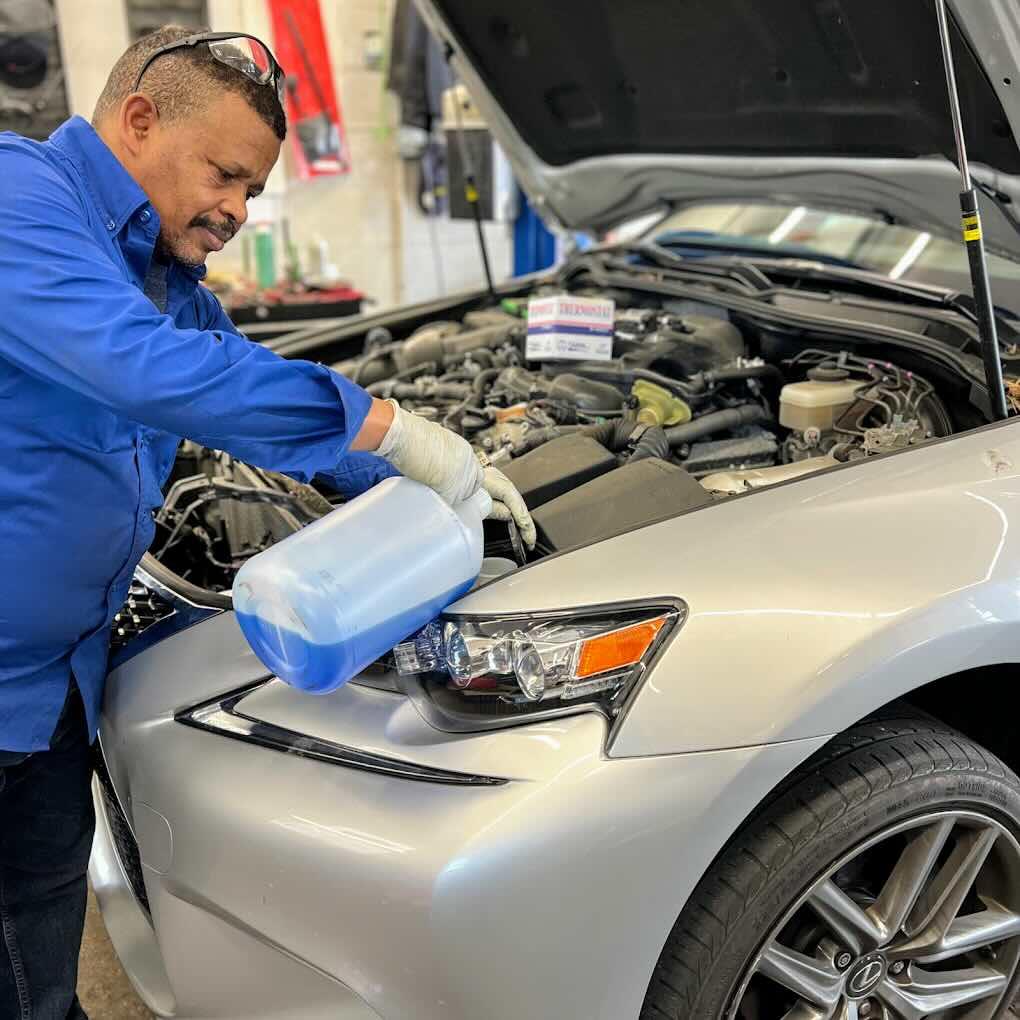
Summer washer fluid can freeze in the reservoir. AAA recommends refilling with fluid made for winter, and VDOT's winter checklist calls for de-icing washer fluid. Fairfax County suggests keeping the washer fluid tank full all season.
Coolant and the heater
Coolant, also called antifreeze, keeps the cooling system from freezing and feeds your heater. AAA recommends a 50:50 mix of coolant and water. Use the type your owner's manual calls for, because mixing incompatible coolants can damage the system. Check the level only when the engine is cold, and never open a hot radiator cap.
If the heater blows cold air, takes forever to warm up, or the defroster can't clear a foggy windshield, don't just live with it for a season. Low coolant, a stuck thermostat or a heater core problem can all cause it. Get your heater and defroster checked before the first frosty commute. Heating trouble often traces back to the cooling system, and we service both.
One more thing about coolant. Some dealers recommend a flush because of the number on the odometer. We check the coolant first. If it's still in good shape, we'll tell you so.
A short emergency kit for Beltway backups
Around here, a winter storm can mean a long backup on I-95 or the Beltway. VDOT's recommended winter kit covers that and more:
- Flashlight and extra batteries
- Ice scraper
- Phone and charger
- Jumper cables
- Blankets
- First aid kit
- Bottled water and snacks like nuts or energy bars
- Cat litter or sand for traction
- A small shovel
Fairfax County also suggests keeping your gas tank full. Before you pull out, clear snow and ice off the roof, hood and trunk, and especially the windows, mirrors and lights. VDOT also recommends lubricating door locks that tend to freeze.
At inspection time, we don't see one make or model fail more than another. What makes the difference is how well the car has been maintained, and a few checks in November cost a lot less than a winter breakdown.
Sources
- Virginia Department of Transportation, Winter weather (pretreatment, plowing priorities, emergency kit)
- Fairfax County, Guide to Snow
- Virginia Administrative Code, 19VAC30-70-130: Tires; wheels; rims
- U.S. Tire Manufacturers Association, Seasonal Tire Care Tips and Tire Care Essentials
- AAA Via, How Cold Weather Impacts Your Battery (Dec. 2024) and 11 Simple Steps to Prepare Your Car for Winter (Oct. 2024)
- Michigan Public, NHTSA: Take care of brake lines on old trucks (April 2015)

Ali, Owner & Service Manager
Ali runs Rolling Road Sunoco Automotive, the family shop his father founded on Rolling Road in 1990. He and our ASE-certified team have spent more than three decades keeping Springfield, Burke and West Springfield drivers on the road.
Related Services
- Tire ServiceMounting, balancing, rotation, alignments, replacements, and flat repair.
- Battery ServiceTesting, replacement, and charging system checks.
- AC & HeatingA/C recharge, heater core repair, blower motor service, and climate control diagnostics.
- Preventative MaintenanceScheduled service to keep your vehicle running at its best.
Need a Hand With Your Car?
Walk-ins welcome at 6381 Rolling Rd, Springfield, VA 22152. Drop off any time with our 24/7 key drop box.