Check Engine Light On? What It Means and When to Stop Driving
If your check engine light is on, what to do depends on how it looks. A steady light means the car needs service soon, and you can usually keep driving gently until you get it checked. A flashing light means a severe engine misfire: slow down, drive as little as possible and get it to a shop right away. If a red temperature or oil light comes on too, pull over and shut the engine off.
Below is how we sort out how serious it is, what to check yourself, and why the light matters for your next Virginia emissions test.
Solid vs. flashing: what each one means
Since the mid-1990s, cars have had an onboard diagnostic (OBD) system that watches the engine and emissions parts. When it spots a problem, it stores a trouble code and turns on the check engine light.
A steady light is a request for service, not an order to stop. The EPA describes the light as a way to tell the driver the car needs service, not that it needs to stop. Many causes are minor. Some, if you ignore them, turn into bigger repairs.
A flashing light is different. The EPA says it signals a severe engine misfire that should be dealt with quickly. According to the EPA, a severe misfire over only a short time can seriously damage the catalytic converter, which is usually the most expensive emissions part to replace.
If yours is flashing:
- Ease off the gas and avoid hard acceleration, towing or heavy loads.
- Keep the trip as short as you can, and go straight to a shop.
- If the car is shaking hard, losing power or the flashing won't stop, park it somewhere safe and have it towed rather than drive it further.
How urgent is it? A quick triage table
| What you notice | How urgent | Likely causes |
|---|---|---|
| Light is flashing | Stop driving soon. Go straight to a shop or park it. | Engine misfire: worn spark plugs, a failing ignition coil, a fuel injector problem |
| Light is steady, and the car stumbles, shakes or feels weak | Get it in within a day or two and drive as little as possible | A milder misfire, a vacuum leak, a bad airflow sensor |
| Light is steady and the car drives normally | Book a diagnosis soon. Don't wait for your inspection. | Oxygen sensor, a small evaporative (EVAP) leak, an aging catalytic converter, a loose gas cap |
| Light came on right after a fill-up | Low. Check the gas cap first. | Loose, cross-threaded or worn gas cap |
| A red temperature or oil pressure light is also on | Pull over and shut the engine off now | Overheating or low oil pressure. These are separate warnings and more serious than the check engine light alone. |
| Light came on, then went off by itself | Low, but mention it at your next visit | An on-and-off fault. A code may still be stored in memory. |
The causes column is a starting point. The same light can come from dozens of different faults, which is why the next two sections matter.
Check the gas cap first
It sounds too simple, but a loose gas cap really can turn on the light. The fuel system is sealed, and the OBD system checks it for vapor leaks. Fueleconomy.gov notes the problem could be "something as minor as a loose gas cap".
- Take the cap off and look at the rubber seal. If it's cracked or torn, replace the cap.
- Put it back on and turn it until it clicks.
- Drive normally for a few days. The EPA says that once a loose cap is tightened, the light should go off within a few days.
If the light is still on after that, the cap probably wasn't the problem. One more reason to keep the cap in good shape: Virginia DEQ lists a missing gas cap as one of the things that can get your car rejected from emissions testing.
Why a free code read isn't a diagnosis
Parts stores will often read your code for free. That's useful, as long as you know what a code is and isn't.
A trouble code tells you which system or circuit the computer saw a problem in. It does not tell you which part failed. Two examples:
- P0420 (catalyst efficiency below threshold). The computer compares the oxygen sensors before and after the catalytic converter. A worn-out converter can set this code. So can a bad oxygen sensor, an exhaust leak or an engine problem upstream. Replacing the converter on the code alone can cost a lot and still not fix it.
- An oxygen sensor heater circuit code. The sensor might be bad. It might also be a chafed wire, a corroded connector or a blown fuse feeding that circuit. A new sensor won't fix a broken wire.
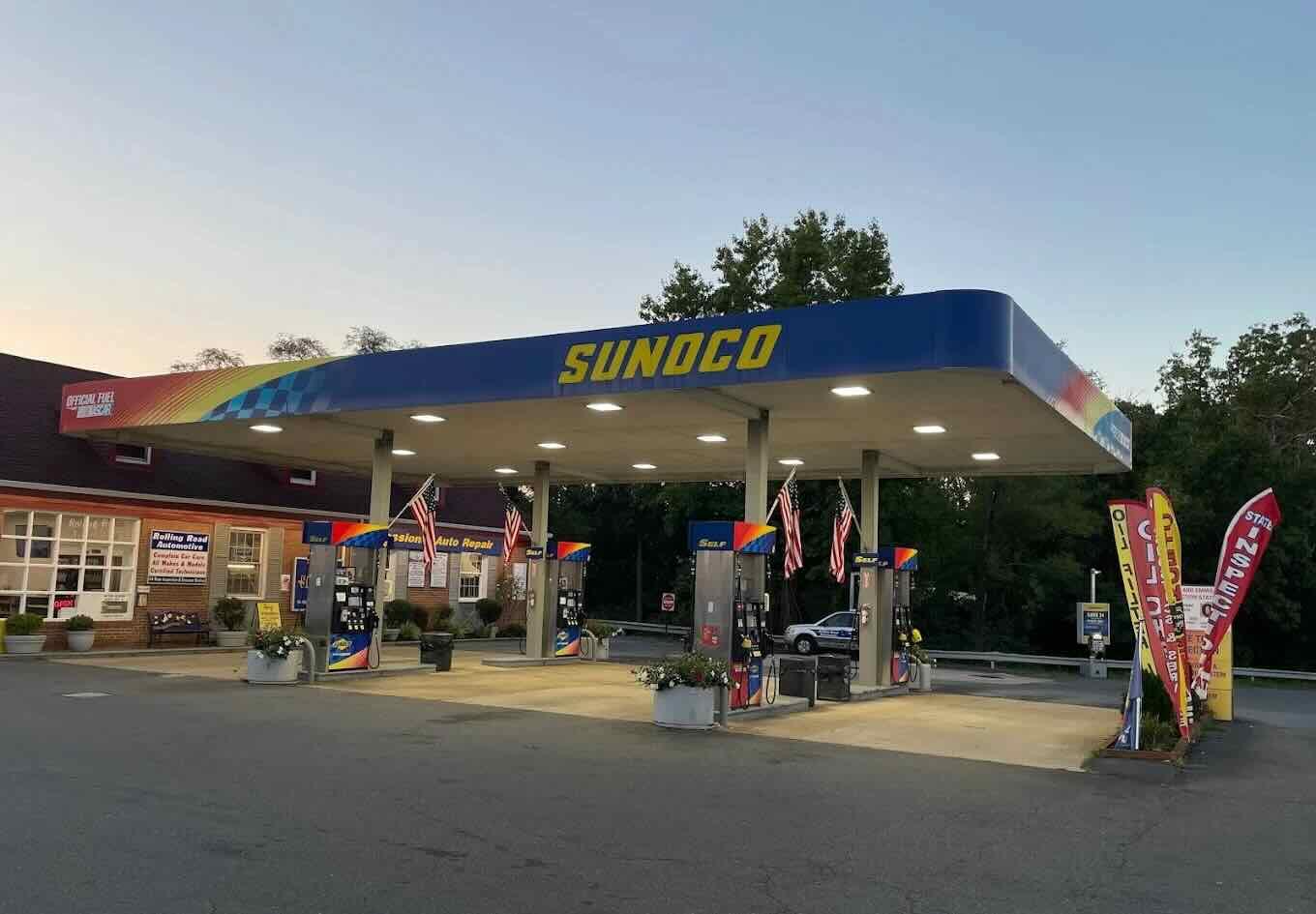
A real diagnosis starts with the code and keeps going. At our shop we use professional scanners, and our master technician examines the car closely to pinpoint the exact issue. We find the actual problem instead of clearing the code and hoping. Then we explain what we found and give you an estimate before we do any work. You can read more about how we handle check engine light diagnosis.
In Fairfax County, a lit light means a failed emissions test
Here's what matters most for drivers around Springfield. Most gas cars registered in Fairfax County and the rest of Northern Virginia need an emissions inspection every two years to renew their registration. On 1996 and newer cars, that test is mostly a check of the OBD system.
Virginia's emissions rules are clear about the light. Under 9VAC5-91-420:
- Emissions-related codes that turn the check engine light on make the car fail.
- A check engine light bulb that doesn't work also makes the car fail.
- A 2001 or newer car with two or more readiness monitors "not ready" is rejected from testing. For 1996 to 2000 models, it's three or more.
So there's no way to pass emissions with the check engine light on. Fix the problem first, drive the car enough for the monitors to finish their self-tests, and then test. If your car does fail, DEQ gives you one free retest at the same station within 14 calendar days.
We're a certified Virginia DEQ emissions station and a DEQ Certified Emissions Repair Facility, and the test is $30. If your light is on, we can diagnose it, make the repair and run the emissions inspection in the same place. The results go straight to the DMV. For the full story on monitors, retests and other reasons cars don't pass, see why cars fail emissions in Fairfax County.
Bringing it in
When you come in, tell us:
- Whether the light is steady or flashing, and if that has changed
- When it first came on, and what you were doing (highway, cold start, just filled up)
- Anything else you've noticed, like rough idle, hesitation, a smell or worse gas mileage
- Any recent work, especially a new battery or anything under the hood
We're open Monday to Friday from 7 AM to 5 PM and Saturday from 7 AM to 1 PM. Walk-ins are welcome. If you can't make it during the day, use our 24/7 key drop box and leave a note with your name, phone number and what the light is doing. We also run a courtesy shuttle.
If the code points to the catalytic converter or an exhaust leak, our exhaust system repair team checks the whole system from the manifold to the tailpipe before recommending a part.
Common questions
Can I drive with the check engine light on?
If it's steady and the car runs normally, yes, for short trips until you can get it checked. If it's flashing, drive as little as possible and only to get it to a shop. If a red warning light is also on, stop.
Will the check engine light turn off by itself?
It can. The EPA notes that if the problem goes away, the OBD computer turns the light off on its own. That's common after a loose gas cap is tightened. If it keeps coming back, have it checked.
Can I disconnect the battery to reset it?
We don't recommend it. It erases the codes and freeze-frame data we'd use to find the problem, and it resets the readiness monitors your emissions test checks. If the fault is still there, the light comes back.
Does a check engine light mean an expensive repair?
Not always. It might be a gas cap. The expensive repairs usually come from waiting. A misfire you leave alone can ruin a catalytic converter, which turns a smaller repair into a much bigger one.
Sources
- U.S. EPA, Frequently Asked Questions About On-Board Diagnostics (EPA420-F-97-003)
- U.S. EPA, What To Do With the Check Engine Light (EPA420-F-00-041)
- U.S. Department of Energy, Keeping Your Vehicle in Shape (fueleconomy.gov)
- Virginia DEQ, How do I get an inspection?
- Virginia DEQ, Why did my vehicle fail?
- Virginia Administrative Code, 9VAC5-91-420: Inspection procedure; rejection, pass, fail, waiver
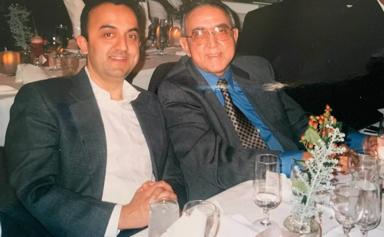
Ali, Owner & Service Manager
Ali runs Rolling Road Sunoco Automotive, the family shop his father founded on Rolling Road in 1990. He and our ASE-certified team have spent more than three decades keeping Springfield, Burke and West Springfield drivers on the road.
Related Services
Need a Hand With Your Car?
Walk-ins welcome at 6381 Rolling Rd, Springfield, VA 22152. Drop off any time with our 24/7 key drop box.